10+ Reasons Why We are on the Doorstep of “Brave New World

In one of my favourite and most thought provoking novels, Aldous Huxley used the future (2540 AD) as the setting and  developed characters in his science fiction novel to express the fear of losing individual identity in the fast-paced world of that future. Unlike Orwell who offered a pushback to communism, Huxley focused more on technology and the ultimate impact of continuing the fast pace evolving out of the Industrial Revolution. So is that future almost upon us? Here are some of the key elements of Huxley’s Brave New World:

Abolition of natural reproduction – Children are educated via appropriate subconscious messages to mold the child’s self-image appropriate to their caste.- Discouragement of critical thinking – Discouragement of individual action and initiative – An abundance of material goods – (presumably because of advanced technology) conditions of work are not onerous – Citizens are conditioned to promote consumption. People enjoy perfect health and youthfulness until death at age 60. The World State is a benevolent dictatorship headed by ten World Controllers which has established a stable global society where the population is permanently limited. The basis of that stability is the conditioning of citizens to accept their station in life.

As a serial entrepreneur who values individualism driven by hope and accomplishment as essential to the human condition the weight of logic tells me that we are all too close to Huxley’s world and long before 2540. Here are more than enough reasons to be concerned. All of them relate to two dominant trends – rapid change and  globalization.

1. The Era of Big Data is here – too much to know and digest

2. Wealth Disparity – economic rewards are accruing to capital – real wages are stagnant or in decline

3. Declining upward mobility – the middle class is in decline trending towards historical norms more limited chances for improvement – Huxley’s caste system?

4. Precarious employment – job stability is simply disappearing — those that don’t take control over their careers will flounder

5. Machine Learning- we are about to handle even more control of our research and knowledge creation to machines. Artificial Intelligence is the next big thing.

6. Cloning – the science exists – the implications are many

7. Stem cell development – we can already grow new organs  – test tube babies are there for the taking. The key to perfect health may well lie in stem cell research.

8. World population is out of control –  in Huxley’s world, a problem solved by limiting life

9. Control of knowledge – with Big Data and Machine Learning will we only know what we are told and will God simply become the internet? Look it up – it must be so?

10. Surveillance – Snowdon  has shown that  we are being watched – this will only get worse and soon

11. Corporatism – we don’t live under free market capitalism – large corporations control global markets and reap the profits – we can thank ourselves for embracing branding to facilitate this – Too Big to Fail puts a deadly premium on Big

12. Multi-nationals – these same corporations driven by profit maximization are pursuing interests that eliminate national interests as they build stronger global foundations for controlling markets. All the time individuals are being encouraged to consume at record rates.

I’m fairly sure I know what Huxley would think. How about you?


Similar Posts

  • Creating a Culture of Entrepreneurial Success

    One of the premises in the introduction of my new book Everyday Entrepreneur is that I wrote it to encourage entrepreneurs of every stripe across the spectrum. Since the high tech entrepreneurs have been getting the lion’s share of the attention and encouragement from the public and investors alike, they were far from my target market. Tech innovation was the creator of venture capital, setting a precedent for high rates of return that can’t be sustained in other areas. Virtually all other types of entrepreneurs have to struggle for funding because they simply don’t meet the criteria for venture capital. Those that have attracted VC funds often flounder to the detriment of the entrepreneur because the VC gets an agreed upon return which can sap a moderately successful business.

    The Creative Destructive Lab at the Rotman School of Management at the University of Toronto (my alma mater) is focused on extreme success with a strong emphasis on taking tech developments from gestation to dynamic success on the international stage. On the surface this seems to be exactly the area that I previously suggested didn’t need my help or encouragement as people are lined up to help in almost every area to develop these type of businesses. So why did I choose to support these high achievers by becoming a partner of the CD Lab? Well here are my reasons:

    1. I strongly support that we need to keep our brightest and best talent here in Canada – we are in the midst of a world wide competition to attract talent – success starts with keeping our own
    2. Success at this level sets a terrific example for anyone in this country that wants to become an entrepreneur and start a business at any level
    3. Both of these factors are critical for us to build a culture of entrepreneurial success to maintain a strong economy and bring in the new talent that every country is striving to attract.
    4. If in the process I can influence some of the brilliant MBAs we are graduating to circumvent the conventional and lucrative path to becoming a business executive in favour of applying their abilities to becoming entrepreneurs who solve problems, make things happen, create jobs and provide the drive that leads to success, then my time and effort will have been well spent.
    5. The very talented people who apply to the Lab are brilliant in their innovation but still need nurturing on the personal issues involved in becoming an entrepreneur, the fundamental business issues they will encounter and the overall philosophy inherent in being an entrepreneur.

    My book will out at the end of November. In the meantime I am enjoying my involvement with the Lab targeting success in a global economy which I firmly believe will centre upon a New Age of Entrepreneurship.

  • Entrepreneurship and Globalization

    Our economy can best be characterized as fast and furious. The combination of globalization and the technological revolution ensure that the one constant in our economic lives is change. This is an environment
    well suited for entrepreneurs who by definition are flexible, adaptable and resilient, unlike big business which has become entrenched and slow to adapt. Big entities grow through acquisition increasingly depending on entrepreneurial enterprise to produce start-ups with potential to feed their growth needs.

    Small business entrepreneurs need to get in on the action. Most think that global trade opportunities accrue to the large corporations that can deal in the volumes required by manufacturing giants like China. However there are large numbers of likeminded entrepreneurs in countries like India, Malaysia and Viet Nam that want to network and connect with entrepreneurs here in North America. Entrepreneurship starts with opportunity and there are many around the world that big business will miss or ignore. Oh they will capitalize on the obvious ones like cheap labour in certain countries but it will take energy and determination common to entrepreneurs who disrupt and challenge the status quo to find the myriad of less obvious opportunities.

    ‘Everyday Entrepreneur’ encourages entrepreneurs to strike out and look for these relationships. They are there to be had. Anecdotes outline experiences in dealing off shore and give insight into different economies and some of the advantages on which entrepreneurs can capitalize.

    Praise for Everyday Entrepreneur:
    “I just finished reading [this] book and enjoyed it immensely. [Fred has] pulled together a wealth of knowledge and advice crucial to the successful entrepreneur in a highly readable fashion. It is a
    must-read for aspiring and seasoned entrepreneurs who are facing today’s complex, volatile, and uncertain world. I especially appreciate the emphasis on thinking globally and adapting proactively.
    We have seen too many examples of yesterday’s winner relying on old models to their detriment. It isn’t easy … but it is exciting and gratifying to create your own business and work to see it flourish. The summary at the end of the book should be bookmarked on every entrepreneur’s computer.”
    — Dr. Sherry Cooper, former executive VP and chief economist for BMO
    and author of three books, including The New Retirement: How it Will Change Our Future.

  • Is Entrepreneurship for you?

    Most of what the average person reads about entrepreneurship sustains the mystique. We revere the outstanding successes achieved by extreme entrepreneurs from Edison to Jobs. Reading about these giants colors our perception of entrepreneurship. We admire their achievements but consider them beyond reach. Their stories sustain misleading myths about entrepreneurship that combine to keep capable people from embracing an entrepreneurial career. Here are some of the distortions that deceive us:
    – Entrepreneurs are born and cannot be made
    – Entrepreneurs are gamblers who take reckless risks to achieve high rewards
    – Entrepreneurs work 24/7 and have little or no personal life
    – Entrepreneurs need to fail in order to succeed
    These established stereotypes derive from two specific types of entrepreneurs. First are the misfits or rebels who either cannot or will not conform; the gamblers to whom few of us can relate. Second and even more prominent are the tech entrepreneurs immersed in the world of venture capital where risk is high, failure is frequent and the rewards for success are dramatic. However Silicon Valley is not the center of the universe and these are not the definitive entrepreneurs; they are but two types of many, both removed from the traditional economy and the rock solid problem solvers that collectively form the engine that drives the economy. Those are the achievers that make things happen especially creating jobs while big business is chasing lower costs around the globe.
    Let’s set the record straight
    Entrepreneurship can be taught. It should be taught and it is being taught
    Becoming an entrepreneur is all about the mindset not the skillset. Entrepreneurs find the way to make things happen they don’t always know the way. This is a teachable philosophy, entirely appropriate in a world dominated by change which generates knowledge and new problems at a phenomenal rate. Finally after fifty years of a flawed model focused on turning out executives for large corporations, colleges and universities have turned their attention to promoting and encouraging entrepreneurship
    Entrepreneurship is not about the risk you take but the results that you achieve
    It’s a startling paradox. Too many good opportunities die prematurely because so many potential entrepreneurs are risk averse. At the same time businesses are failing because of absurd risks fostered by the idea that being an entrepreneur is nothing more than a gamble. Entrepreneurs succeed through determination not by taking unwarranted risk. Managing your risk as you embrace it is critical. Not all ideas are opportunities and every opportunity is not viable.
    Entrepreneurs need to find balance and will make mistakes and have regrets if they don’t
    Having a work ethic is critical. During your startup phase and later when you encounter bumps in the road you will work long hours with great satisfaction. But as things progress and you don’t find balance you are missing something – failing to build your team, keeping too much control or limiting your own development. Both you and your business will suffer. Never forget: you are your most valuable human resource. Balance is a subjective decision but dividing your time does not preclude you from succeeding as an entrepreneur.
    Entrepreneurs do manage their risk and avoid failure – if they fail they learn and move on
    Describing failure as an essential part of success is pure rationalization. Admittedly many entrepreneurs are motivated by the fear of failure more than the rewards of success. Avoiding failure is a powerful source of determination. We do learn from failing because we take the time to analyze it. Success is elating and it masks our faults. Entrepreneurial infallibility is another myth that leads to bad decisions and setbacks that result from forgetting the basics.
    What is an entrepreneur?
    Most of us will never reach achievements like Steve Jobs or Mark Zuckerberg. That does not demean what we do achieve. Society needs to recognize a broad definition of entrepreneurship at every level and value entrepreneurship of every type because in a world dominated by globalization and technology the one thing that we can count on is change across every element of our economy. Resilience and adaptability are important entrepreneurial qualities that allow us to embrace the ongoing pressure for change. In the simplest terms entrepreneurs are problem solvers who consistently make things happen. They are agents of change in an era of change. They are disruptors at a time when the status quo is a moving target. Do you want to be part of the solution or part of the problem? We can all become more entrepreneurial in our beliefs, break out of prison thinking and think outside the box. The alternative is personal stagnation and uncertainty evolving from lack of job stability, declining upward mobility and the shift in income distribution toward the rich. The most important skill you can develop is the ability to create and manage your own career,
    Do understand: we can’t all be innovators but for every innovation there will be thousands of entrepreneurs finding applications for it that solve everyday problems producing jobs and independence in the mainstream economy. Being first is over rated. Doing things better and different often brings greater opportunity. Remember that coffee shops existed in London in 1650 but Starbucks found a new appeal and a great market niche for this old product that resonates in today’s economy.
    Believe in your own ability. You can establish the mindset of an entrepreneur. You can eliminate the word ‘can’t’ from your vocabulary. You can approach problems by skipping right over the question “if” it can be solved and skip directly to the question “how” it will be solved. You can find opportunity and you can analyze to make sure that opportunity is viable. All of this can be done within the context of the traditional economy and you don’t have to be a tech genius to do it. Technology is not a threat but offers a great tool for you to use. We are entering a new era of entrepreneurship which means it really should be an option for almost anyone.

  • Entrepreneurship: Disruption in the face of the “Era of Big”

    We are entering an increasing – no pun intended- age where size is dominant. Big Business, Big Government, Big Unions, Big Data and most damning of all “Too Big To Fail”. We have sacrificed the principles of micro economics such as the optimum size of the firm and the law of diminishing returns to build dominant global enterprises- behemoths more closely related to their bureaucratic enemy, government, than they will ever admit. These entities lumber around the world chasing low costs and cheap labour in the name of maximizing profits. If they fail they plead their case in a public forum that they are too significant to let die. They are pyramids paying outrageous rewards to those that scale to the top.

    What are the implications for individualism. Job stability no longer exists. Big data is generating information far beyond are ability to comprehend. The rate of change is staggering. 24/7 hyper-connectivity has us all chasing our tails, Are we headed for Big Brother? Globalization is both an opportunity and a threat. Small business is vulnerable to competitors around the world but at a time when things are moving at lightening speed entrepreneurs are flexible and adaptable giving them the opportunity to find a niche and move into it before others. The most important skill to learn in this new era is the ability to create your own job. Without it the threat is the loss of upward mobility for many and perhaps economic independence for most. The divergence of wealth between the rich and the poor and the eroding middle class are forewarnings. Entrepreneurship is critical for the individual.

    But it is also critical for these huge entities. Without the impact of disruption based on challenges to the status quo , sometimes referred to as ‘intrapreneurship’, governments and huge businesses will never come close to producing optimum results and solutions. The current conundrum in Washington shows a government that is not only dysfunctional but is mired in a malaise of mediocrity. There are no disruptors coming forward to challenge the party lines and find compromise. Optimum decisions are a pipedream in this environment.

    Entrepreneurs make things happen. They are problem solvers. The greater the problem the greater the reward. Regardless we need them at all levels. It is a skill that some are born with but many can learn. We are headed for a tsunami of Big Data that can swamp us. Machines will literally know more than any individual. It’s a scenario that science fiction writers have been portraying for generations. Individual success will be tied to entrepreneurial skills and attitude. Entrepreneurship has never been more important. We live in interesting times.

  • Embracing Entrepreneurship

    Most of what the average person reads about entrepreneurship sustains the mystique. We revere the outstanding successes achieved by extreme entrepreneurs — everyone from Edison to Jobs. Yet, reading about these giants colors our perception of entrepreneurship. We admire their achievements but consider them beyond reach. Their stories often sustain misleading myths about entrepreneurship that keep capable people from embracing an entrepreneurial career. People begin to believe that to travel down the entrepreneurial path, a person must be born with a particular mindset, take reckless risks to achieve high rewards, work all day, everyday and must fail to succeed. Don’t let these misconceptions scare you off.

    Entrepreneurship can be taught, it should be taught and it is being taught.

    After 50 years of a flawed model focused on churning out executives for large corporations, colleges and universities have turned their attention to promoting and encouraging entrepreneurship. These schools are focusing on teaching the entrepreneurial lifestyle; one focused on both the mindset and the skillset required to become an entrepreneur.

    Entrepreneurship is not about the risk you take, but the results that you achieve

    It’s a startling paradox. Too many good opportunities die prematurely because so many potential entrepreneurs are risk averse. At the same time businesses are failing because of absurd risks fostered by the idea that being an entrepreneur is nothing more than a gamble. Entrepreneurs succeed through determination not by taking unwarranted risk. Managing risk as you embrace it is critical. Not all ideas are opportunities and every opportunity is not viable. Managed risk is inherent in the lean startup focused on getting valuable feedback from potential end users before jumping into full scale operation.

    Entrepreneurs need to find work/life balance and will have regrets if they don’t.

    Having a strong work ethic and being willing to put in extended days when required is critical. During your startup phase and later when you encounter bumps in the road you will work long hours with great satisfaction. But as things progress you need to find balance by building your team, easing control and empowering your staff. You must recharge your batteries. Never forget: You are your most valuable human resource. Without balance your performance will suffer, your business will be restrained and your personal life will be sacrificed unnecessarily.

    Failure is not essential. Entrepreneurs manage their risk and avoid failure.

    Describing failure as an essential part of success is rationalization but many entrepreneurs are motivated by the fear of failure more than the rewards of success. Failure only happens when we either quit or are forced to give up. Mistakes are part of the learning curve. We do learn from them because we take the time to analyze them. Success is elating and it masks our faults. Continually improve by understanding what you do right and correcting what you do wrong in good times and in bad. If you do experience failure you can and will bounce back, many have.

    Being an entrepreneur is within your reach.

    You can become a problem solver who is determined to find a way to make things happen? Understand: we can’t all be innovators but for every innovation there will be thousands of entrepreneurs finding applications that solve everyday problems producing jobs and independence. Being first is over rated. Doing things better and different often brings greater opportunity

    Believe in your own ability.

    You can establish the mindset of an entrepreneur by eliminating the word ‘can’t’ from your vocabulary. You can approach problems by skipping right over the question “if” it can be solved and skip directly to the question “how” it will be solved. You can find opportunity and you can analyze to make sure that opportunity is viable. All of this can be done within the context of the traditional economy and you don’t have to be a tech genius to do it. Technology is not a threat but offers a great tool for you to use. We are entering a new era of entrepreneurship, which means it is an option for almost anyone. If you can’t carry the full weight of your own business bring entrepreneurial thinking to managing your career and performing your role as an employee. You won’t regret it.

  • What aspiring entrepreneurs can learn from the Alberta election

    Yesterday’s Alberta election produced a dramatic change but more than anything else it resulted from change and the inability of the PC party in Alberta to manage change.  One of the reasons so many experts maintain that failure is an integral part of succeeding as an entrepreneur is because we do learn from failure. We have to learn in order to recover so we take the time to analyze what we did wrong in order to avoid repeating the same mistake. Success masks our faults. It is rare for most of us to understand our weaknesses when we are getting results. Unfortunately for the electorate for a political party getting results means maintaining power as opposed to effective performance. When things are going well as they did for Alberta under the boom of the oil industry it was easy for politicians to look good and to develop some bad management practices. When a serious problem developed with falling oil revenues there was a huge need to adjust. We will never know whether the proposed budget was appropriate or not but remember when you have to provide customers, suppliers or employees with a bitter pill for the longer run good don’t turn around and immediately give them control to vote the new policy in or not.

    My mantra for the individual in today’s dynamic world is that the number one skill you can learn is the ability to create and manage your own career, with managing being the key to sustain meaningful success. We face an unprecedented rate of change. Every one of us must have the ability to recreate ourselves in the face of this one certainty: change is a constant, by definition the only thing we can count on besides death and taxes. Despite the perception of many that entrepreneurship requires risk this need not mean reckless risk but instead should refer to managed risk. The PCs had the time and needed it to prove that their budget could work in an economy under duress rather than risking a quick election on the outside chance they would get another majority giving them even more time. So among the small business lessons from yesterday’s election results are the following:

    1. Nothing lasts forever including good times in the oil industry

    2. Sustained success requires a relentless commitment to adapt even after a long track record of doing so.

    3. Managed risk produces results while reckless risk invites failure

    4. Knowing your weaknesses in good times and bad will sustain your success

    5. A change in leadership does not guarantee renewal of an organization

    I’ m sure there are more.

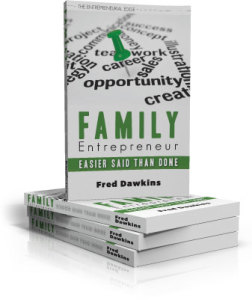
    Fred Dawkins is a serial entrepreneur and the author of a series entitled The Entrepreneurial Edge. The third book in that series Ageless Entrepreneur is available from booksellers across North America on May 9th 2015


Leave a Reply