Globalization, Branding and The Entrepreneur

The appeal and benefits of pursuing a global economy lie in the theory of comparative advantage whereby global completion will ensure that goods and resources will be allocated in the most efficient way, ensuring the most cost effective production of goods and services to the benefit of all. Yet the more we open ourselves up to globalization the greater becomes the discrepancy in wealth distribution which contradicts the theory. Oh to be sure there is a growing middle class in the highly populated eastern countries like India and China but in effect we are just averaging out the wealth of the poor – improving in the eastern world and declining in the west while those at the top accumulate huge fortunes. Upward mobility  on any kind of scale may be in jeopardy.

Life should be getting better for all of us. Instead large corporations are controlling the marketing of most products largely through effective branding  which allows them to keep the lion’s share of the benefits of low cost production in the form of huge profits rather than either paying a fair price or passing along the benefits to the end user. At the same time the demand for labour is shrinking in relative terms through technology and mechanization undermining wage structures around the world. These large corporations have abandoned their identity as national firms in favour of becoming global entities. They are routed in a culture of control and increasingly rely on acquisitions and outsourcing to give them the innovation and flexibility needed in a fast paced world economy immersed in rapid change. As long as they can control the market they retain control of the profits.

So how do we break this system and allow the mass sharing of the efficiencies being gained? The hope lies in entrepreneurs digging in the corners, finding comparative advantages and getting low cost products to market. The problem is that there are barriers to get products to market and if you manage to break through your company soon joins the club bringing in huge profits.  Rather than breaking the system, those that succeed are embracing it. Greed is a powerful motivation in the face of dynamic achievement. So as it stands now entrepreneurial success lies in pursuing startups and selling out or by leapfrogging through this stage and becoming one of the Bigs. Neither of these trends will break the current trend on wealth distribution which is moving back towards the historical norm.

On a macro level entrepreneurs are the main hope to break the culture of control but there are no guarantees that will happen. On an individual level, pursuing a career as an entrepreneur may be the only ticket to upward mobility. That is why the most important skill anyone can master today is the ability to create and manage their own career. We must all adopt the mindset of the entrepreneur.
Similar Posts

  • Entrepreneurship: The Catalyst that puts all other resources to work

    We have been in uncharted economic territory since well before we hit the wall in 2008. While we’re treading water reasonably well we are not finding the corrections that must follow every major downturn. Maybe it would help if we moved passed the Keynes vs. Friedman debate that still dominates economic theory.

    Keynes died in 1946. We are starving for new economic thought to act as the driving force for new and appropriate economic policy. What other discipline has produced such a lack of innovation in the past seventy years? The question begs asking: with the onset of econometrics in the 60s and 70s did we confine our economists to conduct statistical analysis and prepare projections? Even In those areas, economics is a behavioural science so negative projections are almost always softened so as not to become self fulfilling.

    Regardless in today’s fast paced global economy we need new theory and very different action plans. We need to revamp our organizational structures to incorporate greater resilience and adaptability. There is a pressing need to redefine capitalism or at least to reel it in so that the strong trend to increase the rewards for capital while reducing the rewards to labour don’t wreak social disaster . Frankly too Big to Fail is simply Too Big! Large corporations are truly multinational and chase profits above all else. Just look at the reward systems of the largest corporations. These same corporations are hoarding cash because they cannot move fast enough to build from the bottom up. The have to grow through acquisition buying up successful startups. In that sense entrepreneurs offer a lifeline for Big Business which also gains much needed flexibility by contracting out to independents. We have abandoned fundamental microeconomic theories like the Law of Diminishing Returns and the Optimum Size of the Firm, lost in a culture of control enhanced by market dominance founded upon effective branding.

    All of this points to a much greater emphasis on entrepreneurial thinking and entrepreneurs as our economic saviours. It will be entrepreneurs who invest locally who will solve many structural issues. Entrepreneurship has become the economic wonder drug of the 21st century. For individuals this is the key to their economic well being and any hope of upward mobility. In our modern world dominated by globalization, technology and inherent rapid change enhanced by Big Data, we do need to establish new sound economic principles rather than continuing to make it up as we go.

  • FAST and FURIOUS- The accelerator converting innovation to entrepreneurship

    Indisputable: We live in a global work space – an economy where timing is everything and competition comes from every which direction, blindsiding us, especially where Tech is concerned. There is tremendous pressure to be first out to fill a market niche and tremendous pressure on innovators around the world to become instant entrepreneurs OR to give up the lion’s share of the economic benefit of their innovation to others who can get them to market in a hurry.

    If there is a lesson from the Blackberry debacle it’s that being first gives you a head start but the pack quickly turns to finding ways to do it different and better. There is no time to rest on your laurels. Your advantage is short lived- even much less than ten years ago when Blackberry was first riding high.

    Are the expectations of the market achievable or are we simply seeing a new reality where companies come and go with a greatly reduced life expectancy. Apple did fail once. How much longer will it stay at the top this time?

    When you visit an incubator/accelerator you will often see tired young people committed to a 24/7 work ethic, working in small space shared with other start-ups focused on perfecting their innovation with little understanding of the fundamentals required to operate a business or build a foundation for a company that can last. Did Blackberry ever establish that foundation? After all it was always in a dynamic state of rapid change initially positive but for the past three years negative.

    Can humans really continue to cope with the rate of change that technology allows? Are we being forced to abandon stability in favour of short term success? Overall we find ourselves in an integrated global economy, still wrestling with the ongoing effects of the Great Recession, managed by leaders who are challenged at best, incompetent at worst, where the only sure thing is uncertainty.

    For all of these reasons becoming an entrepreneur is an important option. The economic world will place increasing value on resilience and adaptability. In the face of instability and uncertainty the most important skill we may develop will be the ability to create our own job. Big will not be better. Small and flexible will become the key to individual success.

  • 10+ Reasons Why We are on the Doorstep of “Brave New World

    In one of my favourite and most thought provoking novels, Aldous Huxley used the future (2540 AD) as the setting and  developed characters in his science fiction novel to express the fear of losing individual identity in the fast-paced world of that future. Unlike Orwell who offered a pushback to communism, Huxley focused more on technology and the ultimate impact of continuing the fast pace evolving out of the Industrial Revolution. So is that future almost upon us? Here are some of the key elements of Huxley’s Brave New World:

    Abolition of natural reproduction – Children are educated via appropriate subconscious messages to mold the child’s self-image appropriate to their caste.- Discouragement of critical thinking – Discouragement of individual action and initiative – An abundance of material goods – (presumably because of advanced technology) conditions of work are not onerous – Citizens are conditioned to promote consumption. People enjoy perfect health and youthfulness until death at age 60. The World State is a benevolent dictatorship headed by ten World Controllers which has established a stable global society where the population is permanently limited. The basis of that stability is the conditioning of citizens to accept their station in life.

    As a serial entrepreneur who values individualism driven by hope and accomplishment as essential to the human condition the weight of logic tells me that we are all too close to Huxley’s world and long before 2540. Here are more than enough reasons to be concerned. All of them relate to two dominant trends – rapid change and  globalization.

    1. The Era of Big Data is here – too much to know and digest

    2. Wealth Disparity – economic rewards are accruing to capital – real wages are stagnant or in decline

    3. Declining upward mobility – the middle class is in decline trending towards historical norms more limited chances for improvement – Huxley’s caste system?

    4. Precarious employment – job stability is simply disappearing — those that don’t take control over their careers will flounder

    5. Machine Learning- we are about to handle even more control of our research and knowledge creation to machines. Artificial Intelligence is the next big thing.

    6. Cloning – the science exists – the implications are many

    7. Stem cell development – we can already grow new organs  – test tube babies are there for the taking. The key to perfect health may well lie in stem cell research.

    8. World population is out of control –  in Huxley’s world, a problem solved by limiting life

    9. Control of knowledge – with Big Data and Machine Learning will we only know what we are told and will God simply become the internet? Look it up – it must be so?

    10. Surveillance – Snowdon  has shown that  we are being watched – this will only get worse and soon

    11. Corporatism – we don’t live under free market capitalism – large corporations control global markets and reap the profits – we can thank ourselves for embracing branding to facilitate this – Too Big to Fail puts a deadly premium on Big

    12. Multi-nationals – these same corporations driven by profit maximization are pursuing interests that eliminate national interests as they build stronger global foundations for controlling markets. All the time individuals are being encouraged to consume at record rates.

    I’m fairly sure I know what Huxley would think. How about you?


  • Why Branding is a threat to the middle class

    In theory as Globalization evolves resources will be allocated in the most efficient way possible ensuring that goods will be produced on the lowest cost basis to the benefit of all. In a perfect global system labour will shift around until the transition is complete and the rewards for labour will equalize around the global network. During the transition while wage rates in higher earning countries are frozen or rise slowly as wage rates in other areas catch up, those living in the higher wage countries will benefit from low cost goods during the transition. All of this takes place without impediments or barriers to free and open competition. Entrepreneurs will drive the progress by ferreting out opportunities across the global system.

    In practice as we continue to embrace such a global system, the rewards to labour in the low wage countries are lagging while much of the benefit of low cost goods are not reaching the consumer. Instead the rich are becoming the super rich while the middle class is facing the reality of returning to an historical norm with relative rewards well below those achieved in the west for the past sixty years during which consumerism has flourished. In an evolving era of Big Data where the status quo is becoming a moving target while character traits such as adaptability and resilience are becoming more critical, the business behemoths of the world are getting richer by controlling markets. Much of this control stems from branding and creating the allusion that branded goods are inherently superior. At the same time effective marketing has mislead us that these behemoths are so critical that they are ‘too Big to Fail’. Branding has effectively created near monopolies effectively providing barriers to entry for aspiring entrepreneurs in the process by limiting their upside and increasing their challenges

    Mammoth organizations operating on ten year plans are not appropriate for our fast paced Global economy. However control over markets allows them to achieve innovation and flexibility through outsourcing and acquisition. Oh these in themselves do create upside for entrepreneurs who can launch a startup and find an eager buyer for their initial success. However the odds against success are greater and fewer of us are likely to get there. It is certainly possible for a limited few to build new brands creating new members of the super rich club. However overall we have abandoned core economic principles such as the Law of Diminishing Returns and the Optimum Size of the firm in favour of uninformed consumerism and market control through brands owned and managed by what are effectively huge bureaucracies. Is there a tipping point ahead? Surely social media and instant communication are a threat to the dominance of brands – OR are they just additional instruments of control?

    Globalization has brought large numbers into the global work force, increasing the supply of labour. Technology through robotics and mechanization is reducing the demand for labour. Together these factors create downward pressure on wage rates. Upward mobility for the individual is in decline. Capital is securing the lion’s share of the rewards. Job stability is one of the status quos that is disappearing. For all of these reasons the individual must become his or her own brand. The most important skill you can learn today is the ability to create and manage your career.

  • Is Entrepreneurship for you?

    Most of what the average person reads about entrepreneurship sustains the mystique. We revere the outstanding successes achieved by extreme entrepreneurs from Edison to Jobs. Reading about these giants colors our perception of entrepreneurship. We admire their achievements but consider them beyond reach. Their stories sustain misleading myths about entrepreneurship that combine to keep capable people from embracing an entrepreneurial career. Here are some of the distortions that deceive us:
    – Entrepreneurs are born and cannot be made
    – Entrepreneurs are gamblers who take reckless risks to achieve high rewards
    – Entrepreneurs work 24/7 and have little or no personal life
    – Entrepreneurs need to fail in order to succeed
    These established stereotypes derive from two specific types of entrepreneurs. First are the misfits or rebels who either cannot or will not conform; the gamblers to whom few of us can relate. Second and even more prominent are the tech entrepreneurs immersed in the world of venture capital where risk is high, failure is frequent and the rewards for success are dramatic. However Silicon Valley is not the center of the universe and these are not the definitive entrepreneurs; they are but two types of many, both removed from the traditional economy and the rock solid problem solvers that collectively form the engine that drives the economy. Those are the achievers that make things happen especially creating jobs while big business is chasing lower costs around the globe.
    Let’s set the record straight
    Entrepreneurship can be taught. It should be taught and it is being taught
    Becoming an entrepreneur is all about the mindset not the skillset. Entrepreneurs find the way to make things happen they don’t always know the way. This is a teachable philosophy, entirely appropriate in a world dominated by change which generates knowledge and new problems at a phenomenal rate. Finally after fifty years of a flawed model focused on turning out executives for large corporations, colleges and universities have turned their attention to promoting and encouraging entrepreneurship
    Entrepreneurship is not about the risk you take but the results that you achieve
    It’s a startling paradox. Too many good opportunities die prematurely because so many potential entrepreneurs are risk averse. At the same time businesses are failing because of absurd risks fostered by the idea that being an entrepreneur is nothing more than a gamble. Entrepreneurs succeed through determination not by taking unwarranted risk. Managing your risk as you embrace it is critical. Not all ideas are opportunities and every opportunity is not viable.
    Entrepreneurs need to find balance and will make mistakes and have regrets if they don’t
    Having a work ethic is critical. During your startup phase and later when you encounter bumps in the road you will work long hours with great satisfaction. But as things progress and you don’t find balance you are missing something – failing to build your team, keeping too much control or limiting your own development. Both you and your business will suffer. Never forget: you are your most valuable human resource. Balance is a subjective decision but dividing your time does not preclude you from succeeding as an entrepreneur.
    Entrepreneurs do manage their risk and avoid failure – if they fail they learn and move on
    Describing failure as an essential part of success is pure rationalization. Admittedly many entrepreneurs are motivated by the fear of failure more than the rewards of success. Avoiding failure is a powerful source of determination. We do learn from failing because we take the time to analyze it. Success is elating and it masks our faults. Entrepreneurial infallibility is another myth that leads to bad decisions and setbacks that result from forgetting the basics.
    What is an entrepreneur?
    Most of us will never reach achievements like Steve Jobs or Mark Zuckerberg. That does not demean what we do achieve. Society needs to recognize a broad definition of entrepreneurship at every level and value entrepreneurship of every type because in a world dominated by globalization and technology the one thing that we can count on is change across every element of our economy. Resilience and adaptability are important entrepreneurial qualities that allow us to embrace the ongoing pressure for change. In the simplest terms entrepreneurs are problem solvers who consistently make things happen. They are agents of change in an era of change. They are disruptors at a time when the status quo is a moving target. Do you want to be part of the solution or part of the problem? We can all become more entrepreneurial in our beliefs, break out of prison thinking and think outside the box. The alternative is personal stagnation and uncertainty evolving from lack of job stability, declining upward mobility and the shift in income distribution toward the rich. The most important skill you can develop is the ability to create and manage your own career,
    Do understand: we can’t all be innovators but for every innovation there will be thousands of entrepreneurs finding applications for it that solve everyday problems producing jobs and independence in the mainstream economy. Being first is over rated. Doing things better and different often brings greater opportunity. Remember that coffee shops existed in London in 1650 but Starbucks found a new appeal and a great market niche for this old product that resonates in today’s economy.
    Believe in your own ability. You can establish the mindset of an entrepreneur. You can eliminate the word ‘can’t’ from your vocabulary. You can approach problems by skipping right over the question “if” it can be solved and skip directly to the question “how” it will be solved. You can find opportunity and you can analyze to make sure that opportunity is viable. All of this can be done within the context of the traditional economy and you don’t have to be a tech genius to do it. Technology is not a threat but offers a great tool for you to use. We are entering a new era of entrepreneurship which means it really should be an option for almost anyone.

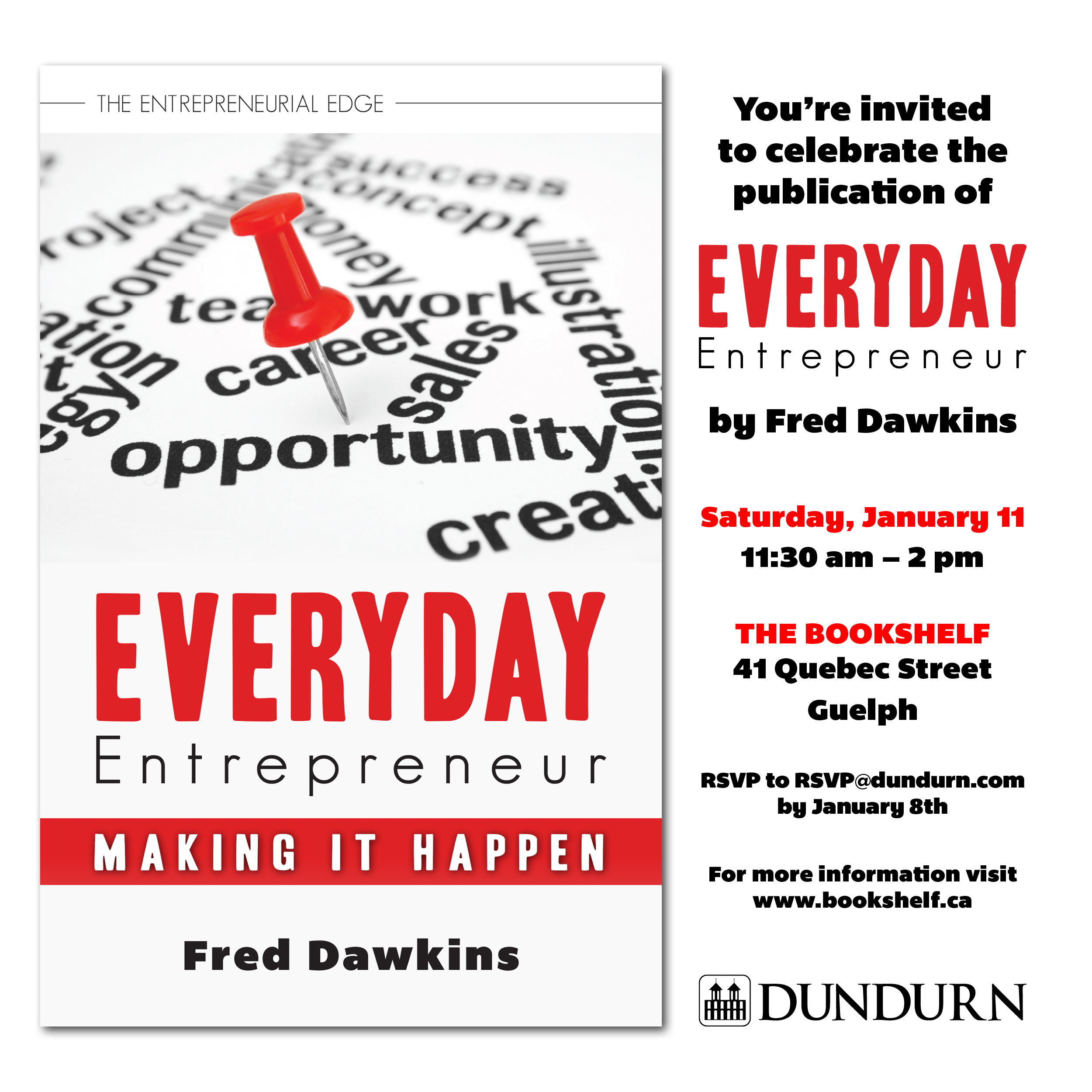
  • Why You Should Become an Everyday Entrepreneur

    The most important skill you can learn today is the ability to create and manage your own career. We live in a world where globalization and technology combine to guarantee that the one constant we face is rapid change. There is no room for prison thinking as the status quo must constantly be challenged to ensure that we stay competitive. The most important characteristics for individuals, organizations and countries alike are resilience and adaptability. These are the key characteristics of entrepreneurs.
    Unfortunately the prevailing stereotypes of entrepreneurs discourage many people from embracing the idea. Most of our perceptions about entrepreneurship stem from two specific types:
    First are the misfits; those who either can’t fit in or don’t choose to embrace the norm. These are the rebels characterized as risk takers or gamblers. They convey the image of success achieved through reckless risk, initial failures and inherent natural instincts that allow them to succeed in areas that most won’t try.
    The second high profile type is the tech entrepreneur immersed in the world of venture capital, an area typified by high risk, a high rate of failure and exceptional rewards for success. This is sphere that gives us most of the buzz words attributed to entrepreneurship such as accelerators, incubators and burn rate. The latter tells you when you will run out of funds so identifies the point at which you need and hope to have an investor. It’s a little like bungee jumping, hoping that someone will come along and tie your rope securely before you hit the ground but you leap anyway.
    Together these two stereotypes re-enforce the perception that above all else entrepreneurs are risk takers whose success is tempered by failure. As a result of such typecasting many good projects never see the light of day while others fail by taking risks that can’t be justified.
    These are but two forms of a wide range of entrepreneurial types but unfortunately they get most of the attention. Regardless they are far removed from the everyday entrepreneurs who provide the engine that drives the economy and the stimulus that creates jobs locally when big business is preoccupied chasing profits around the globe. In the broader circle the critical terms are practical; words like bootstrapping and the lean startup. Words grounded in reality and pragmatism. Hope is not the prevailing sentiment. Being proactive is critical. These mainstream entrepreneurs certainly take risks. The risk and reward dichotomy are joined at the hip. No doubt the greater the risk the greater the reward and the higher the chance of failure. Most successful entrepreneurs know how to manage their risk. Failure is far from a prerequisite. Learn from it if you must but avoid it if you can through anticipation, resilience and adaptability. Entrepreneurs are not defined by the risk that they take but rather by the results that they achieve. They are problem solvers who make things happen.
    So what does it take to become an everyday entrepreneur? Is this a skill that can be learned or does it just come naturally? Do you have to work 24/7 and sacrifice your personal life to be successful? Is it all about the mystique or is there a formula to follow? Since this is a lifestyle about embracing change and becoming adaptable a formula is hardly appropriate. The key starting point is the philosophy. Becoming an entrepreneur is far more about the mindset than the skillset. Entrepreneurship is entirely about finding a way not knowing the way. In a modern world where new data is being generated at an alarming rate how much of what we know do we actually understand? Entrepreneurs never become preoccupied with whether they can accomplish something but spend their time and effort looking for solutions. The question ‘if’ doesn’t come up. Instead they ignore it moving immediately to ‘how’. They don’t have all the answers but they are dogged in their determination to solve the issue at hand. This is certainly a belief and an approach that can be taught and quite effectively. Entrepreneurship can be taught, it should be taught and it is starting to be taught. Colleges and Universities across the country are rushing to find the best ways to spread the word.
    Does this mentality mean a 24/7 workaholic lifestyle? That’s a very personal choice but a bad one if you choose it. You may well work long hours during your startup phase when you are the generalist wearing every possible hat and passing through a learning curve that will prepare you for the next phase. You will also work those same long hours when you hit a bump in the road, a major threat and/or opportunity that needs your full attention. However, if you continue to do this as your regular routine, once you complete the startup stage, you are making mistakes that will limit both your life and your business. Either you are not building your team properly or you have become a control freak unable to delegate. In either case you and your business will suffer. In the end you will have regrets. Finding balance, admittedly a subjective decision is critical. Remember the most important human resource in your company is you. So find ways to take vacation; pay yourself fairly, attend courses and travel. Don’t let your business outgrow you.
    In addition to determination the other essential ingredient for everyday entrepreneurs is opportunity. All ideas are not opportunities and every opportunity is not viable. Having ideas makes you a dreamer; converting them into reality makes you into an entrepreneur. This does not mean you have to be an innovator. For every innovation there are thousands of entrepreneurs who find applications in the process solving a wide range of problems in the business world. Experience helps you identify opportunity. Empathy can help because it makes you sensitive to problems that exist for others. Most opportunities do start with problems; the bigger the problem the higher the reward for solving it. That’s another aspect of the entrepreneurial mindset – every problem is an opportunity. You do have to be vigilant. All opportunities are not created equally but you have to make the best of what is available. Waiting for just the right one is like waiting for the winning lottery ticket. Often people just don’t see the possibilities but they are always some there if you are looking.
    There are many other elements of being an everyday entrepreneur but determination and opportunity constitute the foundation. Most important don’t undervalue what you do. We need to value entrepreneurship at all levels, not just the superheroes like Steve Jobs. If running a business is not for you, work on that entrepreneurial mindset. Job stability is fleeting so manage the business of your career by making good decisions and taking jobs that build your personal brand. Every business today is placing new value on disruptors. These are people who challenge the status quo. Be entrepreneurial in your thinking, you won’t be sorry

Leave a Reply